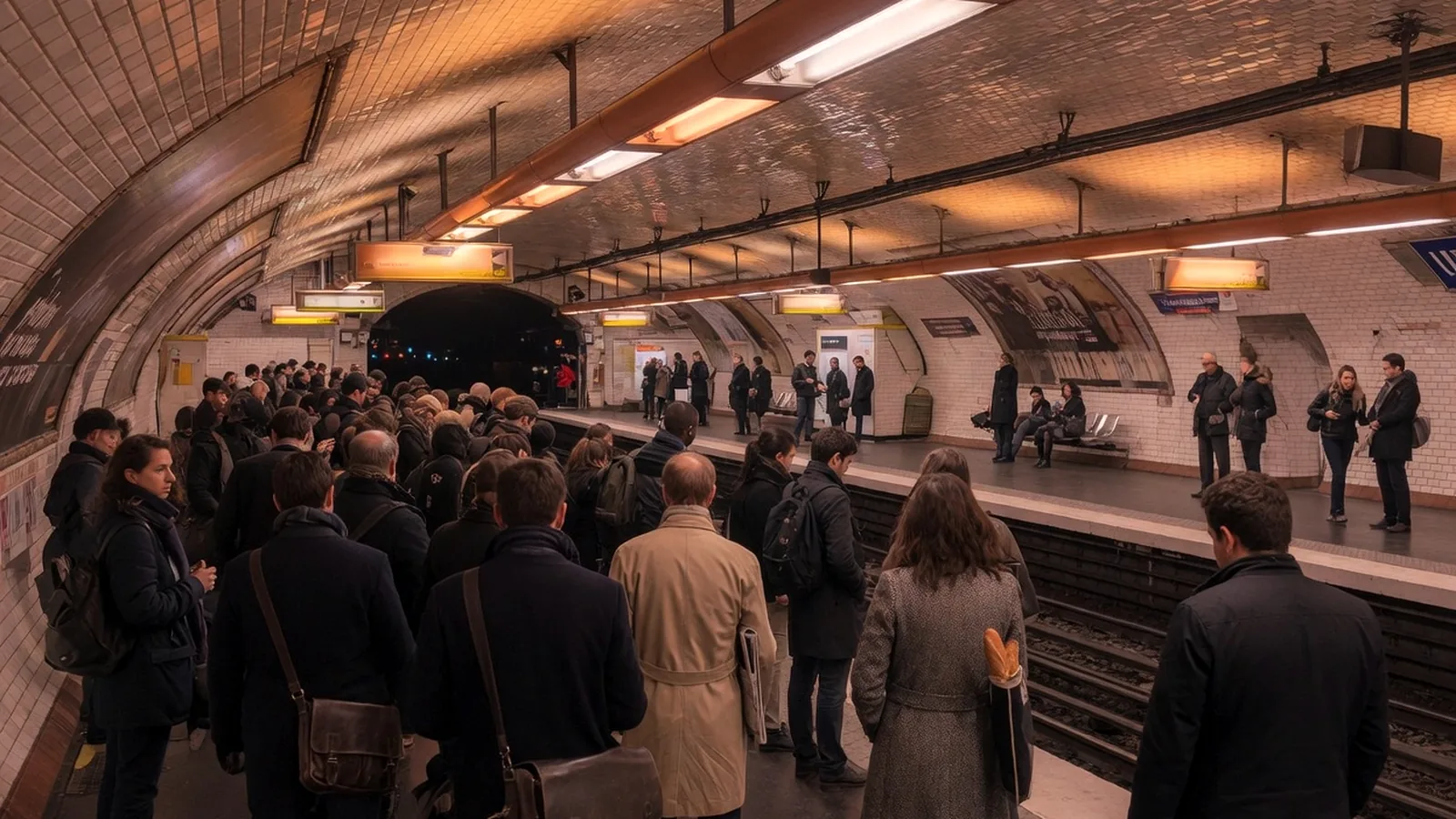
Tennis holds a particular place in French sport: it is prestigious, aspirational, and anchored by one of the world's four Grand Slam tournaments. Roland-Garros — the French Open, played on the terre battue (clay — the crushed brick surface that defines Roland-Garros) of the Stade Roland-Garros in Paris's 16th arrondissement — is tennis's most distinctive event. The red clay, the two-week format, the Parisian backdrop, and the gruelling physical demands make it the tournament that players consider the hardest to win.
Roland-Garros
The Venue
The Stade Roland-Garros underwent a €380-million renovation completed in 2020–2021: a retractable roof on Court Philippe-Chatrier (ensuring play in rain), a new Court Simonne-Mathieu (set in greenhouses), and expanded facilities. The venue is named after Roland Garros — not a tennis player but a World War I aviator who was the first to fly across the Mediterranean (1913) and who was killed in combat in 1918.
The "King of Clay"
Rafael Nadal's dominance of Roland-Garros (14 titles, 2005–2022, with a 112–4 career record on the clay) has defined a generation of the tournament. The Nadal era overshadowed French players at their own Grand Slam — a source of admiration and frustration in equal measure.
French Tennis History
The Musketeers
French tennis's golden age was the 1920s–30s, when the Quatre Mousquetaires (the Four Musketeers — the four French tennis legends who dominated the late 1920s) — René Lacoste, Jean Borotra, Henri Cochet, and Jacques Brugnon — dominated world tennis, winning six consecutive Davis Cups (1927–32). Lacoste later founded the clothing brand that bears his name (and the crocodile logo).
Yannick Noah
Yannick Noah's 1983 Roland-Garros victory remains the last French men's singles Grand Slam title — a 40+ year drought that weighs heavily. Noah (born in Cameroon, raised in both Cameroon and France) became a national hero and later a successful Davis Cup captain.
The Modern Era
French men's tennis has produced multiple top-10 players without a Grand Slam breakthrough:
- Jo-Wilfried Tsonga — Reached the 2008 Australian Open final. Flamboyant, powerful, adored.
- Gaël Monfils — Extraordinary athleticism. Multiple deep Grand Slam runs. Never broke through.
- Richard Gasquet — Beautiful one-handed backhand. Career-best ranking #7.
- Adrian Mannarino, Ugo Humbert, Arthur Fils — The current generation, still seeking a breakthrough.
In women's tennis, Amélie Mauresmo (Australian Open 2006, Wimbledon 2006) was the last French Grand Slam champion. Mary Pierce (Australian Open 2000, Roland-Garros 2000) preceded her. Caroline Garcia has been the most prominent recent French woman player.
The FFT and Development
The Fédération Française de Tennis (French Tennis Federation) (FFT) oversees approximately 1 million licensed players and 7,500+ clubs — making it the third-largest sports federation in France (after football and equestrian). The FFT is also one of the wealthiest: Roland-Garros generates enormous revenue (ticket sales, TV rights, merchandising), which the FFT reinvests into development.
The French tennis development system produces depth rather than superstars: France consistently has 5–10 players in the ATP/WTA top 100, a remarkable breadth even if individual champions have been scarce.
The Club System
French tennis is played primarily in clubs rather than public courts. Annual membership (€200–800 depending on the club) provides access to courts, coaching, and competitive leagues organised by département and region. The club system creates social infrastructure: many tennis clubs also serve as community centres, with restaurants and social events.
The Davis Cup and Billie Jean King Cup
France has won the Davis Cup 10 times (most recently 2017) and is historically one of the strongest Davis Cup nations. The competition holds particular significance in France — Noah's captaincy (1991–98, 2015–17) and the 2017 final victory over Belgium in Lille (in front of 27,000 at the Pierre Mauroy stadium) are sporting landmarks.
France has also won the Billie Jean King Cup (formerly Fed Cup) three times.
Sport Overview — Tennis in the broader context of French sport and government policy.
Motor Racing — Another French sporting obsession — from Le Mans to Formula One.
On the ground
| Pin | Working note |
|---|---|
| Page | French Tennis: Roland-Garros and the Clay Court Tradition |
| Desk | Le Moteur |
| First use | Read the pins, then one related page — not five |
| Confirm | Official site or ticket desk the week you go |

If another France InfoBuffoon guide owns the beat — a park gate, a museum Tuesday, a wine list — we send you there instead of duplicating a thinner copy here. French Tennis: Roland-Garros and the Clay Court Tradition sits in a country that is easy to over-plan and easy to under-prepare. The sport layer is where visitors collect names. This page is the opposite: what to do first, what to skip, and which sibling guide holds the rest.
France rewards a slow unit. One arrondissement, one valley, one appellation, one park trail. The photograph of five landmarks in five days is a real holiday, and it is also a queue with a passport. If you only have three nights, spend two of them in the same bed. The third night is for a train, not a third hotel.
Working a visit
Practical France is sockets (Type E/F, 230 V), tap water that is safe, pharmacies that are the real clinic for minor trouble, and a lunch hour that still closes a village. Cards work in cities. Cash still opens some park kiosks, some island boats, and some market stalls that have never seen contactless. A lightweight adapter belongs in the personal item, not the hold.
We will not write as if every reader is on a gap year, or as if every reader is in a palace hotel. We will not flatten 'the south' into one climate. We will not treat a strike day, a jour férié, or a Tuesday museum closure as a personality quirk of the French. They are calendars. Check them. Then use French Tennis: Roland-Garros and the Clay Court Tradition as a pin, not as scripture.
Cross the five guides instead of cloning them. La Porte holds trains and the first week. La Terre holds weather and park gates. L'Esprit holds museum Tuesdays and the Revolution. La Table holds the market morning and the wine list. Le Moteur holds the Tour, the working week, and why August is empty in Paris and full on the coast.