Pétanque (a boules game played by throwing metal balls toward a small wooden target ball) is not really a sport. It is a social institution. It requires no athletic ability, no special equipment (beyond three metal boules and a small wooden cochonnet (the small wooden target ball in pétanque — literally 'piglet')), no particular fitness, and no designated facility — any patch of level gravel or dirt will do. It is played by 17 million French people at least occasionally, making it, by participation, the most practised physical activity in France (ahead of football, cycling, and swimming).
It is also, at the competitive level, surprisingly technical, tactically complex, and fiercely contested.
The Rules
The basic rules are simple:
- A circle is drawn on the ground. One team throws the cochonnet 6–10 metres away.
- A player from that team throws a boule toward the cochonnet, attempting to land as close as possible.
- The opposing team then throws until one of their boules is closer than the opponent's closest boule.
- The first team throws again if they are not closest. Play alternates until all boules are thrown.
- The team with the boule closest to the cochonnet scores one point for each of their boules that is closer than the opponent's nearest boule.
- First to 13 points wins.
Formats: tête-à-tête (one-on-one — each player with 3 boules) (1v1, 3 boules each), doublette (pairs — two players per team) (2v2, 3 boules each), or triplette (triples — three players per team) (3v3, 2 boules each).
The Two Arts
Pétanque strategy revolves around two fundamental skills:
- Pointer (to point — rolling or lobbing the boule to land close to the cochonnet) — Placing a boule near the cochonnet through precision. Pointers use a high, arcing lob that lands softly and stops near the target.
- Tirer (to shoot — throwing the boule to knock an opponent's boule away) — Removing an opponent's boule by hitting it directly with a firm throw. Elite tireurs strike with astonishing accuracy from 8–10 metres.
The tactical interplay between pointing and shooting — when to protect a lead, when to attack, when to move the cochonnet — gives the game a depth that casual observers rarely appreciate.
The Culture
The Village Game
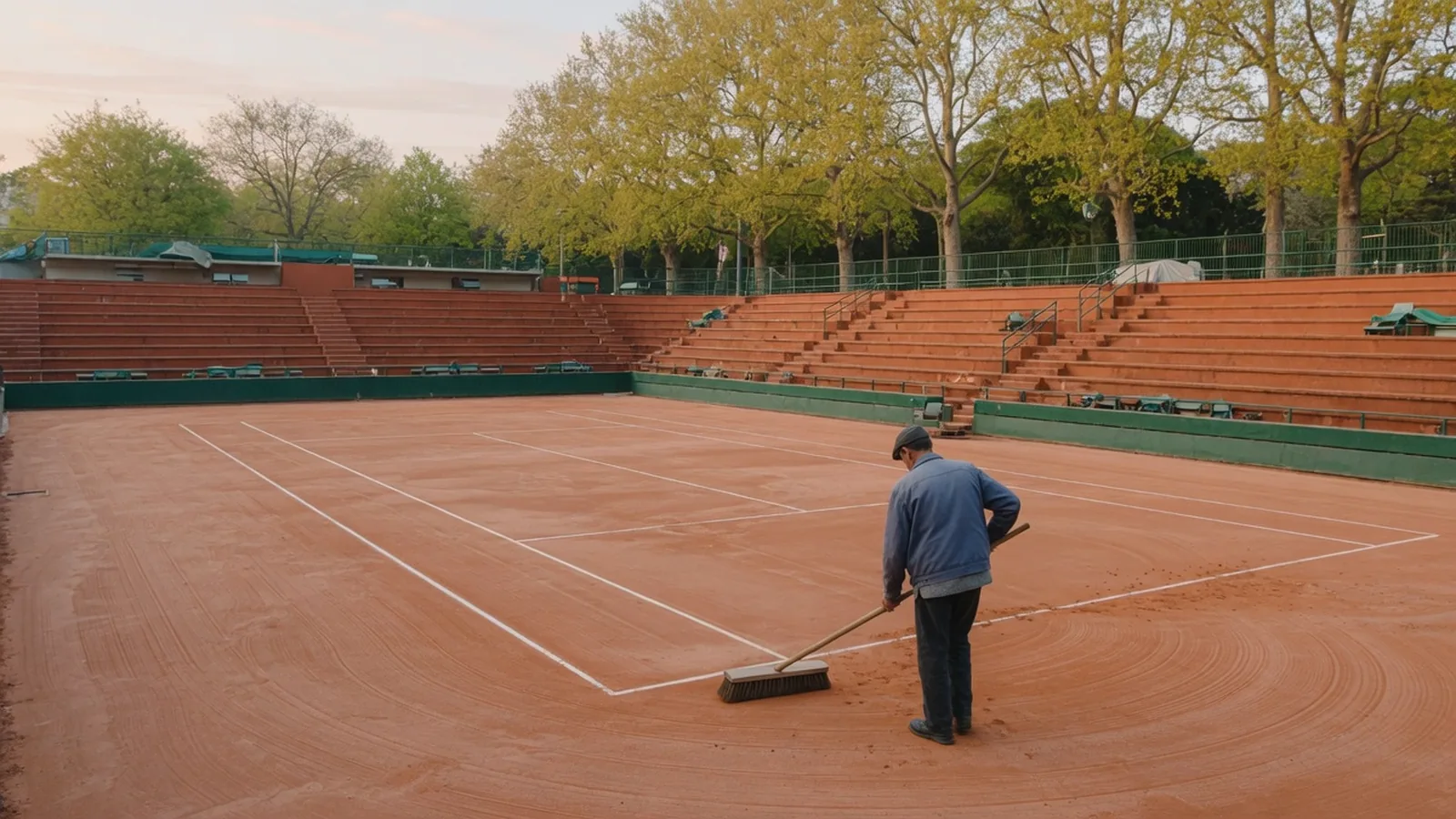
Pétanque is inseparable from the terrain de pétanque (pétanque ground — the gravel or dirt surface where the game is played) — the patch of gravel in the village square, the town park, the campsite. Every commune in southern France has one. The setting is as important as the game: the plane trees providing shade, the café nearby, the pastis (pastis (anise-flavoured spirit, the quintessential pétanque accompaniment)) being poured. The game is a pretext for the social ritual.
Southern Roots
Pétanque was formalised in La Ciotat (near Marseille) in 1907 — though boules games of various kinds had existed in Provence for centuries. The game's heartland remains the south: Provence, Languedoc, the Basque Country, and the Rhône Valley. It is played throughout France (and globally — 67 countries belong to the FIPJP), but its cultural association is Mediterranean.
The Professional Scene
Competitive pétanque exists and is taken seriously:
The Mondial La Marseillaise, held in Marseille each July, is the world's largest pétanque tournament: approximately 13,000 triplettes (39,000 players) compete over several days. The city effectively shuts down for the event. Prize money is modest by professional sports standards, but the prestige is genuine.
The Federation
The Fédération Française de Pétanque et Jeu Provençal (French Pétanque and Provençal Game Federation) (FFPJP) has approximately 290,000 licensed members, making it one of France's largest sports federations. Actual players vastly outnumber licence holders: estimates of occasional players range from 10–17 million.
The federation also oversees jeu provençal (Provençal game — an older, running-throw variant of boules) (also called la longue (the long game)), the older variant in which players take a running approach before throwing. Jeu provençal predates pétanque and is still played competitively in Provence, though pétanque has overwhelmingly overtaken it in popularity.
Beyond France
Pétanque has a genuine international following. Thailand, Madagascar, Cambodia, and several West African countries play at a high level — largely a legacy of French colonial influence. Japan has a growing pétanque scene. The sport's simplicity and low equipment cost make it accessible worldwide. There is an ongoing (and so far unsuccessful) campaign for inclusion in the Summer Games.
Recreational Activities — Pétanque in the broader context of French recreational and social sport.
Aperitif Hour — The pastis-and-pétanque ritual that defines summer evenings.
On the ground
| Pin | Working note |
|---|---|
| Page | Pétanque: France's Most Democratic Sport |
| Desk | Le Moteur |
| First use | Read the pins, then one related page — not five |
| Confirm | Official site or ticket desk the week you go |

Pétanque: France's Most Democratic Sport is a working page on Le Moteur, not a souvenir. Use it with the week you travel. Pétanque: France's Most Democratic Sport sits in a country that is easy to over-plan and easy to under-prepare. The sport layer is where visitors collect names. This page is the opposite: what to do first, what to skip, and which sibling guide holds the rest.
France rewards a slow unit. One arrondissement, one valley, one appellation, one park trail. The photograph of five landmarks in five days is a real holiday, and it is also a queue with a passport. If you only have three nights, spend two of them in the same bed. The third night is for a train, not a third hotel.
Working a visit
Practical France is sockets (Type E/F, 230 V), tap water that is safe, pharmacies that are the real clinic for minor trouble, and a lunch hour that still closes a village. Cards work in cities. Cash still opens some park kiosks, some island boats, and some market stalls that have never seen contactless. A lightweight adapter belongs in the personal item, not the hold.
We will not write as if every reader is on a gap year, or as if every reader is in a palace hotel. We will not flatten 'the south' into one climate. We will not treat a strike day, a jour férié, or a Tuesday museum closure as a personality quirk of the French. They are calendars. Check them. Then use Pétanque: France's Most Democratic Sport as a pin, not as scripture.
Cross the five guides instead of cloning them. La Porte holds trains and the first week. La Terre holds weather and park gates. L'Esprit holds museum Tuesdays and the Revolution. La Table holds the market morning and the wine list. Le Moteur holds the Tour, the working week, and why August is empty in Paris and full on the coast.