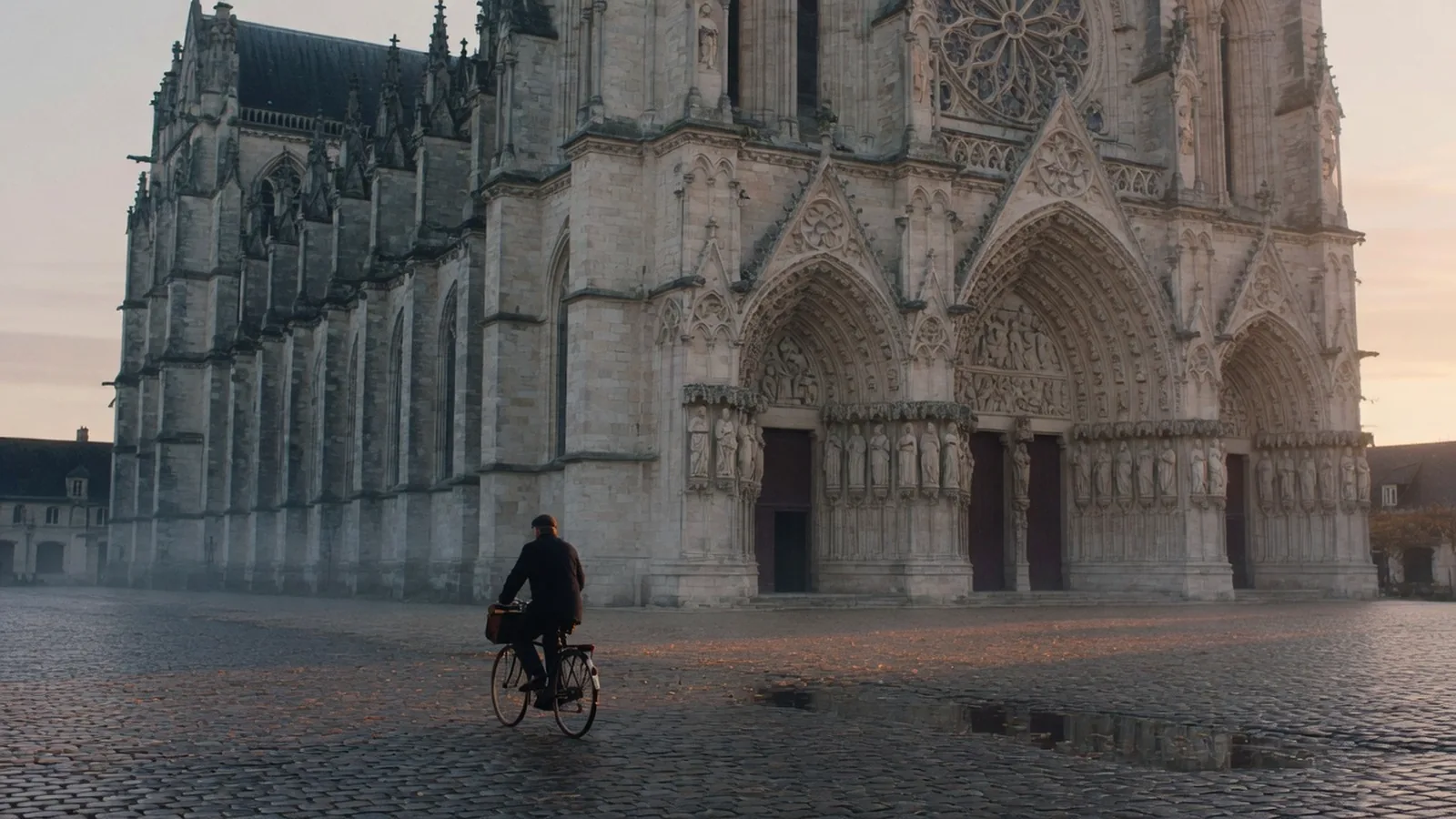
France adopted the euro on 1 January 1999 (physical notes and coins from 1 January 2002), abandoning the franc (the French franc — French currency from 1360 to 2002) after 641 years. The transition was both an economic restructuring and an emotional departure. The franc was a symbol of sovereignty; the euro is a symbol of European integration. France's relationship with both tells you everything about the country's position in Europe: committed to the European project, but perpetually anxious about what it costs.
France in the Eurozone
The Architecture

France was a founding architect of the euro. The Maastricht Treaty (1992) — signed in the Netherlands but substantially a Franco-German negotiation — established the convergence criteria: deficit below 3% of GDP, debt below 60% of GDP, low inflation, stable exchange rates. France has consistently struggled with the first two criteria while meeting the others.
| France & the Eurozone | Detail |
|---|---|
| Joined: 1 January 1999 (accounting); 1 January 2002 (physical currency) | |
| Previous currency: French franc (FRF), subdivided into centimes | |
| Conversion rate: 1 EUR = 6.55957 FRF (irrevocably fixed) | |
| Eurozone share: ~17% of eurozone GDP (second largest after Germany) | |
| ECB role: France holds permanent representation on the ECB Governing Council via the Banque de France governor |


The Impact
The euro has brought France price stability, lower interest rates, and elimination of currency risk within its largest trading bloc. French companies no longer face exchange-rate uncertainty when trading with Germany, Italy, or Spain — which together account for over 40% of French exports.
The costs are less visible but significant: France cannot devalue its currency to boost competitiveness (as it routinely did with the franc). Monetary policy is set by the ECB in Frankfurt, not the Banque de France in Paris. Fiscal policy is constrained by EU rules that France frequently bends but cannot ignore.
The Banking System
The Major Banks
France has one of Europe's strongest banking systems, dominated by four universal banks:
- BNP Paribas — France's largest bank and the eurozone's largest by assets (~€2.6 trillion). Full-service: retail, corporate, investment banking, asset management. Global presence.
- Société Générale — Major universal bank. Strong in investment banking, retail banking (in France and Africa), and insurance.
- Crédit Agricole — Originally a farmers' cooperative bank, now the world's largest cooperative financial group. The largest retail bank in France by number of customers. Strong in insurance (via Predica) and asset management (Amundi).
- BPCE (Banque Populaire / Caisse d'Épargne) — Cooperative group. Second-largest retail banking network. Owns Natixis (investment banking).
The Mutual Sector
A distinctive feature of French banking is the dominance of banques mutualistes (mutual/cooperative banks — owned by their members, not shareholders). Crédit Agricole, BPCE, and Crédit Mutuel are all cooperatives. Together, they hold roughly 60% of French retail deposits. This structure — more conservative, more regionally rooted, less prone to speculative excess — contributed to French banks' relative resilience during the 2008 financial crisis (relative, not absolute: Société Générale suffered a €4.9 billion loss from the Jérôme Kerviel trading scandal).
Retail Banking
French retail banking operates differently from Anglo-Saxon models:
- Current accounts are overwhelmingly free (no monthly fees).
- Cheques (chèques (cheques — still in use in France, unlike most of Europe)) remain in circulation. France is the last major European country where cheques are still commonly used, though their numbers are declining rapidly.
- The Carte Bancaire — The Carte Bancaire (the French debit/credit card system — often abbreviated CB) (CB) system dominates card payments. France pioneered chip-and-PIN technology in the 1990s, a decade before the UK.
- Livret A — The Livret A (a regulated, tax-free savings account available to all French residents) is a uniquely French institution: a state-guaranteed, tax-free savings account with a regulated interest rate. Approximately 55 million Livret A accounts exist — nearly one per person. The accumulated savings (~€400 billion) fund social housing via the Caisse des Dépôts.
The Banque de France
The Banque de France (the French central bank — founded 1800 by Napoleon), founded by Napoleon in 1800, is France's national central bank and a member of the Eurosystem. Since the creation of the euro, it no longer sets monetary policy independently but serves as the French arm of the ECB's operations. Its domestic role remains significant:
- Over-indebtedness management — The Banque de France operates France's personal insolvency system, assisting individuals in excessive debt.
- Financial stability monitoring — The Autorité de Contrôle Prudentiel et de Résolution (ACPR), housed within the Banque de France, supervises banks and insurers.
- Banknote production — The Papeterie de Vic-le-Comte produces euro banknotes for France and other countries.
- Economic statistics — The Banque de France produces detailed regional and sectoral economic data.
The Franc: A Brief Obituary

The franc's history spans 641 years — from the gold franc of Jean II in 1360 (minted to pay his ransom from English captivity) through the livre tournois, the revolutionary franc germinal, and the "new franc" of 1960 (when de Gaulle lopped two zeros off the old franc to restore confidence). Many older French people still convert mentally to anciens francs (old francs — the pre-1960 denomination), quoting property prices in a currency that has not existed for over sixty years.
The franc's great vulnerability was devaluation. Between 1945 and 1995, the franc was devalued repeatedly against the Deutschmark. Joining the euro ended this cycle — at the cost of ending the flexibility that devaluation provided.
Economy Overview — The macroeconomic context in which French banking operates.
Paris as Financial Centre — Paris's position in European and global finance — post-Brexit opportunities and the CAC 40.
On the ground
| Pin | Working note |
|---|---|
| Page | The Euro & French Banking: France in the Eurozone |
| Desk | Le Moteur |
| First use | Read the pins, then one related page — not five |
| Confirm | Official site or ticket desk the week you go |
Hours, fares, and festival weeks move. A 2024 caption is not a 2026 desk. The Euro & French Banking: France in the Eurozone sits in a country that is easy to over-plan and easy to under-prepare. The economy layer is where visitors collect names. This page is the opposite: what to do first, what to skip, and which sibling guide holds the rest.
France rewards a slow unit. One arrondissement, one valley, one appellation, one park trail. The photograph of five landmarks in five days is a real holiday, and it is also a queue with a passport. If you only have three nights, spend two of them in the same bed. The third night is for a train, not a third hotel.
Working a visit
Practical France is sockets (Type E/F, 230 V), tap water that is safe, pharmacies that are the real clinic for minor trouble, and a lunch hour that still closes a village. Cards work in cities. Cash still opens some park kiosks, some island boats, and some market stalls that have never seen contactless. A lightweight adapter belongs in the personal item, not the hold.
We will not write as if every reader is on a gap year, or as if every reader is in a palace hotel. We will not flatten 'the south' into one climate. We will not treat a strike day, a jour férié, or a Tuesday museum closure as a personality quirk of the French. They are calendars. Check them. Then use The Euro & French Banking: France in the Eurozone as a pin, not as scripture.
Cross the five guides instead of cloning them. La Porte holds trains and the first week. La Terre holds weather and park gates. L'Esprit holds museum Tuesdays and the Revolution. La Table holds the market morning and the wine list. Le Moteur holds the Tour, the working week, and why August is empty in Paris and full on the coast.